ServicesWhole Home Water Filtration
Whole Home Water Filtration in Marina del Rey
We install a point-of-entry filtration system on the main line into your home, so the water at every shower, sink and appliance runs through carbon first. You get a written scope that lists the tank, the media and the plumbing work before anything is cut in.
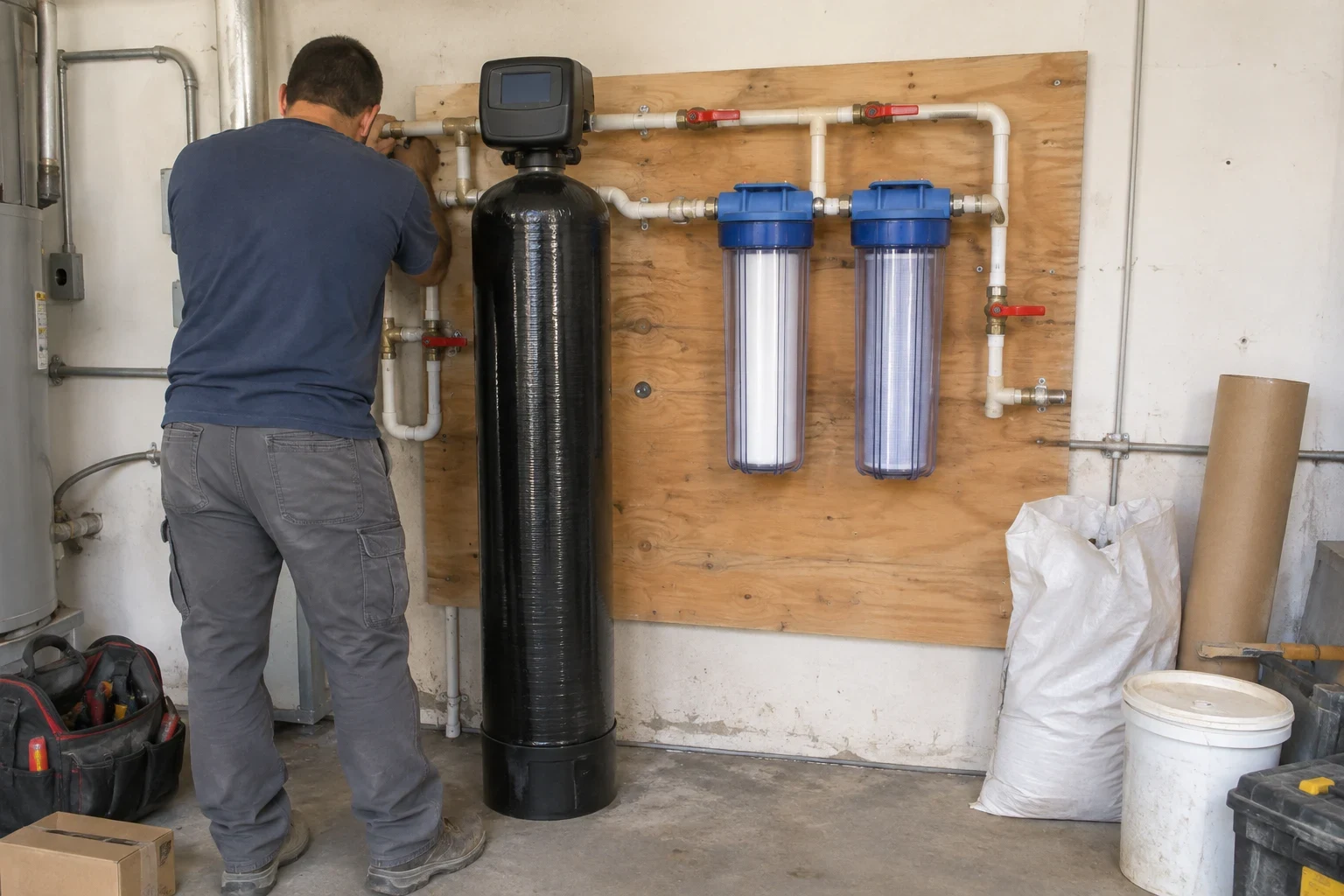
Where the system treats water, and where carbon stops
The tank goes in at the point where your main water line enters your home, often by the garage, along an exterior wall or in the water heater closet. Water passes through it once on the way to every fixture. Inside is a bed of activated or catalytic carbon. Given enough contact time, the carbon adsorbs the disinfectant and the taste and odor compounds that travel with it. Many Southern California utilities disinfect with chloramine, which standard carbon handles poorly compared with plain chlorine. For that reason we often specify catalytic carbon, which breaks the chlorine-ammonia bond much more effectively.
Know the limits before you buy. Carbon leaves hardness minerals in the water, so white spots on glass and scale on fixtures will continue. It also won't take water to bottled-drinking-water purity. For that at the kitchen tap, reverse osmosis under the sink is the right tool, and some homes run both. We spell out what this system will and won't do in writing, so the purchase matches the result.
What the installation includes
- A tank sized for peak demand
- We work out how many gallons per minute your fixtures pull at their busiest and pick the carbon bed to suit. An undersized bed lets water rush through before the carbon can treat it, and you notice weak pressure when two showers run at once.
- Prefilter for sand and scale
- Upstream of the carbon tank we mount a cartridge housing that traps sand and flakes of pipe scale. Keeping grit off the carbon bed protects its service life.
- Bypass valve and shutoffs
- Every system gets a bypass so you can keep water flowing during service. Ball valves on both sides let us isolate the tank without shutting off the whole house.
- Bonding jumper on metal pipe
- Where copper piping is part of the electrical grounding path, we install a bonding jumper across the filter. Otherwise the plastic tank fittings would break that path.
- Media flush and startup
- New carbon releases fine dust, so we flush the tank to drain until it runs clear before we open it to the house.
- Cleanup and walkthrough
- We remove cut pipe and packaging, wipe down the work area, and show you the bypass, the prefilter housing and the service schedule.
Signs your home is a good fit
A chemical smell in the shower
Hot water releases disinfectant into the air, so a pool smell is strongest in a steamy bathroom. A kitchen filter can't fix that. A system on the main line can.
You're buying filters for every tap
Pitcher filters, a fridge filter and a showerhead cartridge add up, and each one needs its own changes. One tank at the point of entry replaces most of them.
Grit in aerators and showerheads
Fine sand or flakes in faucet screens point to sediment in the line. The prefilter stage catches it before it reaches your fixtures and appliances.
Skin and hair feel dry after bathing
Many people notice this with chloraminated water. Removing the disinfectant at the main line is the most direct fix for showers and baths.
What changes the price
We install for free and cover that cost, so most of your price is the equipment. The two things that move it are how big the system is and what shape the plumbing is in where it connects. Each item below appears on your written quote before any work begins.
Tank size
More bathrooms pull more gallons per minute, so the house needs a bigger carbon bed to keep the water in contact long enough.
Media type
Catalytic carbon is pricier than standard activated carbon, yet it deals with chloramine much better. We tell you which your water needs and the reason.
Extra stages
Every system gets a sediment prefilter. Some homes gain from one more stage aimed at a particular taste or particle issue, and it is priced on its own line.
Pipe material and location
Corroded or galvanized pipe near the tie-in may have to be replaced so the connection holds. An outdoor install also needs a cover to shade the tank. Both are noted before you agree to the job.
How the work goes
- 1
A phone conversation first
Tell us what bothers you about your water, roughly how many bathrooms you have and where the main shutoff sits. We will say honestly whether a system for the whole house is worth it or something smaller would cover it.
- 2
Site look and written quote
We check the size and material of the main line, how much floor room there is, and whether the spot is inside or exposed to sun. The quote spells out the tank size, media, prefilter and plumbing work, and nothing is added after you sign.
- 3
Tie-in and setting the tank
With the main valve closed, we fit the isolation valves and bypass, set the tank on level footing and add a bonding jumper where the pipe is metal. The water is off for part of the day, and we tell you the hours in advance so nobody is caught mid-shower or mid-load.
- 4
Startup and handover
We run the fresh media to drain, look over every joint for leaks and read the pressure at a fixture inside. You keep a written schedule for cartridge and carbon changes after we go.
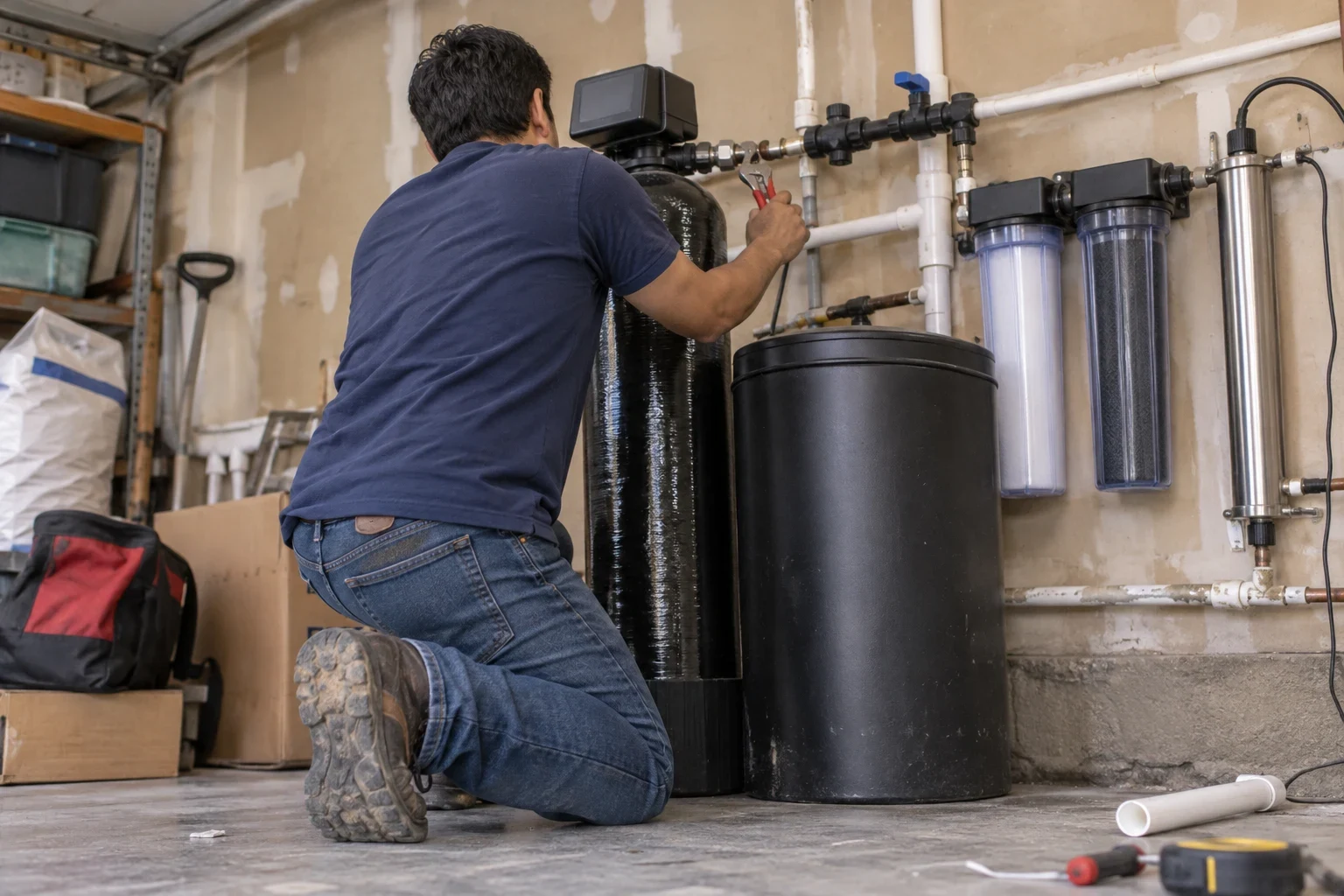
Whole home filtration questions
Will my showers lose pressure after the tank goes in?
A correctly sized carbon tank costs only a small amount of pressure, usually too little to notice in a normal day. Most pressure complaints trace back to a tank that is too small for the house. We work from your fixture count instead of guessing, then measure pressure at an indoor tap once the system is running.
How is this different from reverse osmosis?
A whole home carbon system treats all the water entering your home for disinfectant, taste and sediment. Reverse osmosis pushes water through a membrane that removes far more dissolved material, but it is slow, so it is installed at one tap for drinking and cooking. Many homes choose one or the other, and some use both.
Does it remove hard water spots?
No. Carbon does not remove the calcium and magnesium that leave spots and scale. We say that up front, so you don't buy this system expecting a result it can't deliver.
How often does the media need replacing?
It depends on how much water your home uses and how much disinfectant is in it. The sediment cartridge is changed more often than the carbon bed. We write down the expected intervals for your system at handover.
Can the tank go outside?
Yes, and in many homes the main line is outside anyway. The tank needs a level pad and protection from direct sun, since UV degrades the tank and fittings over time. If a cover is needed, it is listed in the written scope.
See the full scope before you decide
Tell us about your home and your water, and we'll explain which system fits and why. You get the tank, media and plumbing work in writing before anything is installed.