ServicesCity Water Filtration
City Water Filtration in Marina del Rey
Utility water is disinfected on purpose, and that disinfectant is what you taste and smell at the tap. We install carbon filtration sized for your home's flow rate, and we put the scope, the parts and every pricing factor in writing before we start.
What a city water system does, and what it doesn't
Municipal water in the Los Angeles area is treated with a disinfectant, usually chlorine or chloramine, so it stays safe as it travels through miles of distribution pipe. It does its job well. The tradeoff is a pool-like smell in the shower and a flat, chemical taste in coffee, tea and ice.
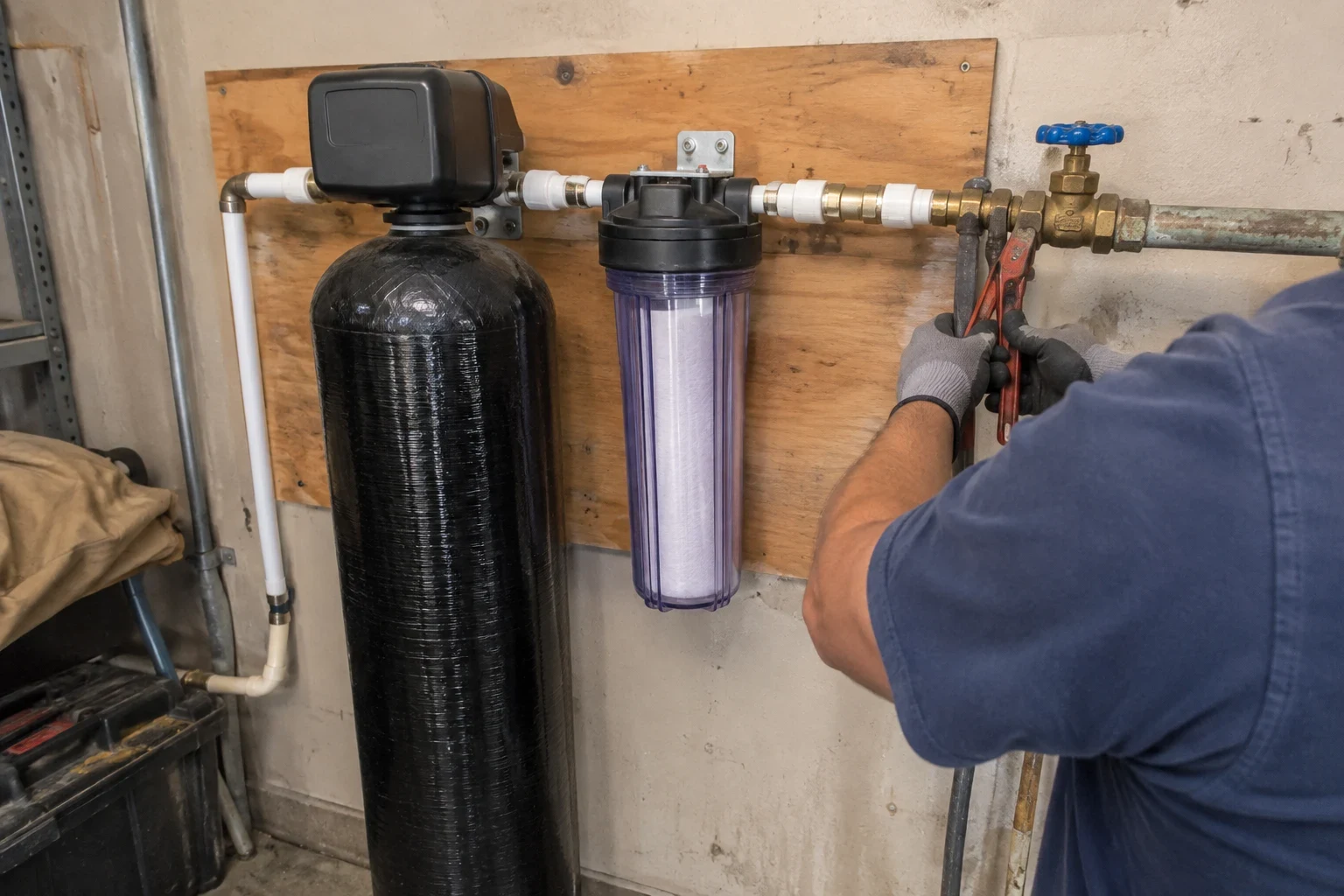
A city water system goes on the main line where water enters your home. A sediment prefilter catches grit and pipe scale first. Then water passes through a tank of activated carbon, which grabs chlorine on its surface. Chloramine is more stable and needs catalytic carbon and longer contact time, which is why tank size and media type matter more than the brand name on the housing.
Carbon does not soften water or remove dissolved minerals. If you want very low dissolved solids for drinking and cooking, reverse osmosis at the kitchen sink pairs well with a city water system, and we can price both on the same estimate.
What the installation includes
- Sediment prefilter
- Before water ever reaches the carbon, it passes through a cartridge housing that holds back sand, rust flakes and loose scale. That keeps the carbon bed from plugging up, and this cartridge is the piece you will swap most often.
Signs city water filtration fits your home
A bleach smell in the shower
Hot water releases chlorine as a gas, so a small bathroom with the door shut traps the odor and makes it strongest there. Because carbon sits on the main line, it treats the water feeding your shower as well as your kitchen tap.
What moves the price
We offer free install (we cover the cost), so your price comes down mostly to the equipment your home needs. Each factor is spelled out on your estimate, so you can see why one system is recommended over another. Here is what makes the difference.
Flow rate and home size
More bathrooms mean higher peak demand. A larger tank holds more carbon, keeps contact time up and avoids a pressure drop when two showers run at once.
Chlorine or chloramine
Standard activated carbon handles chlorine well. Chloramine needs catalytic carbon, which costs more per cubic foot but is the right media for that disinfectant.
Main line location and size
A three-quarter-inch line in an open garage is a different setup than a one-inch line behind a finished wall or in a tight condo closet. Pipe size also sets the fitting and valve sizes.
Prefilter and add-ons
A larger prefilter housing means fewer cartridge changes. Pairing the system with reverse osmosis at the kitchen sink adds a second unit to the estimate.
How the job runs
- 1
Phone conversation
We ask how many bathrooms you have, where the main line enters, whether it runs through a garage, closet or exterior wall, and who supplies your water. That tells us the likely tank size and media.
- 2
Scope and price on paper
You get a written scope that lists the tank, media type, prefilter, bypass and fittings, plus the factors behind the price. Nothing gets added on install day that is not on that page.
- 3
Installation
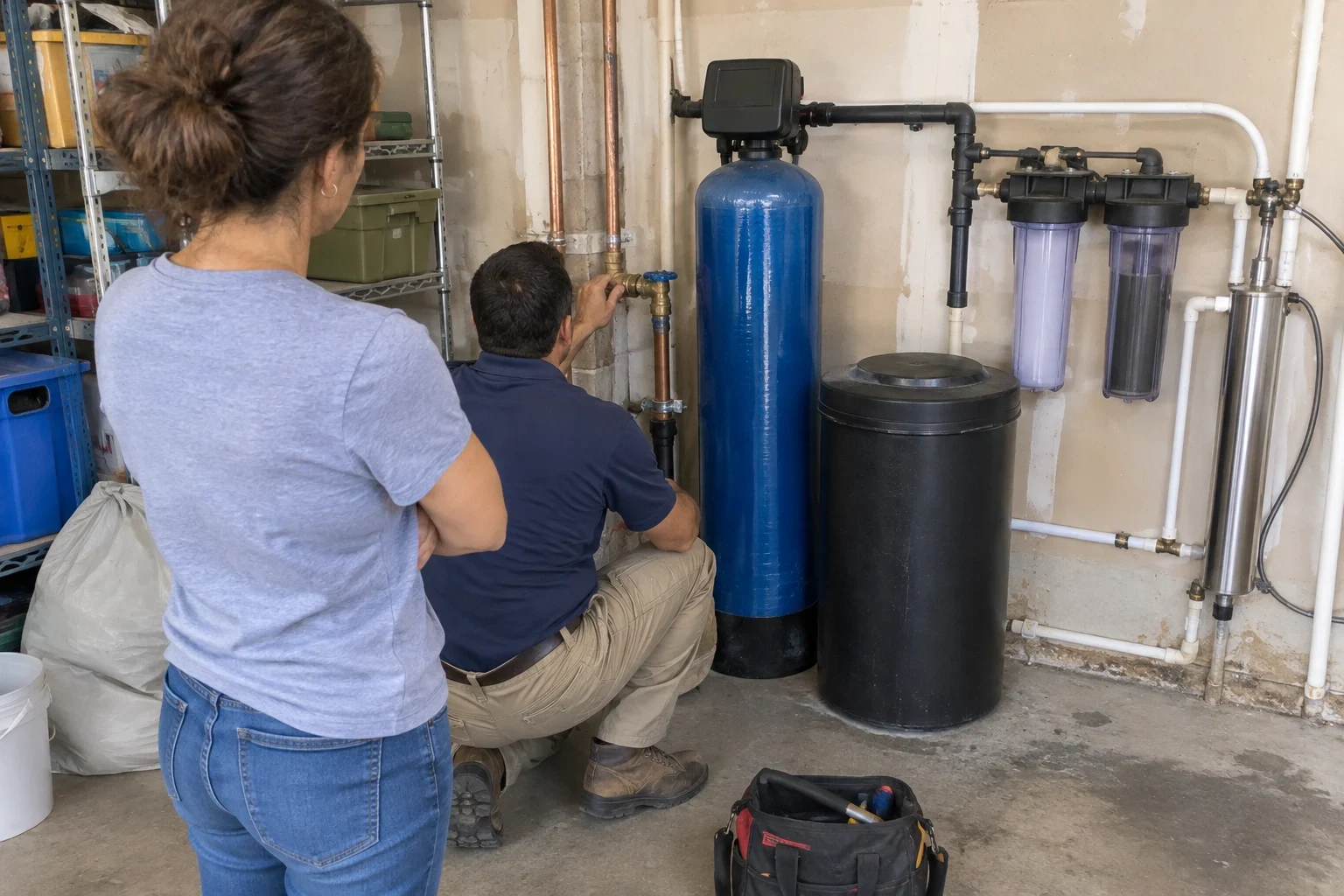
We shut off the water, cut in the bypass and mount the prefilter and carbon tank, usually within a few hours. Drop cloths go down on the floor around the main line, and we haul away cut pipe, boxes and wrapping when we finish.
- 4
Flush, check and hand-off
We flush the carbon until it runs clear, pressure-check every joint and walk you through the bypass and maintenance schedule.
Questions about city water systems
Does this take out chloramine too, or just chlorine?
The answer depends on what fills the tank. Plain activated carbon breaks down chloramine slowly, so if your utility uses it, we call for catalytic carbon and pick a bigger tank to give the water longer contact. The disinfectant is listed in your supplier's yearly water quality report, and we check it together on the phone.
See the full scope before anything is installed
Tell us about your home and your water, and we will lay out the tank, the media and the price factors in writing. No surprise add-ons once the work starts.