ServicesWell Water Filtration
Well Water Filtration in Marina del Rey
Well water carries sand, dissolved iron and sometimes a sulfur smell that city water never brings into your home. We install filter trains matched to your well's flow and the problem you actually have, and you see every part and price in writing first.
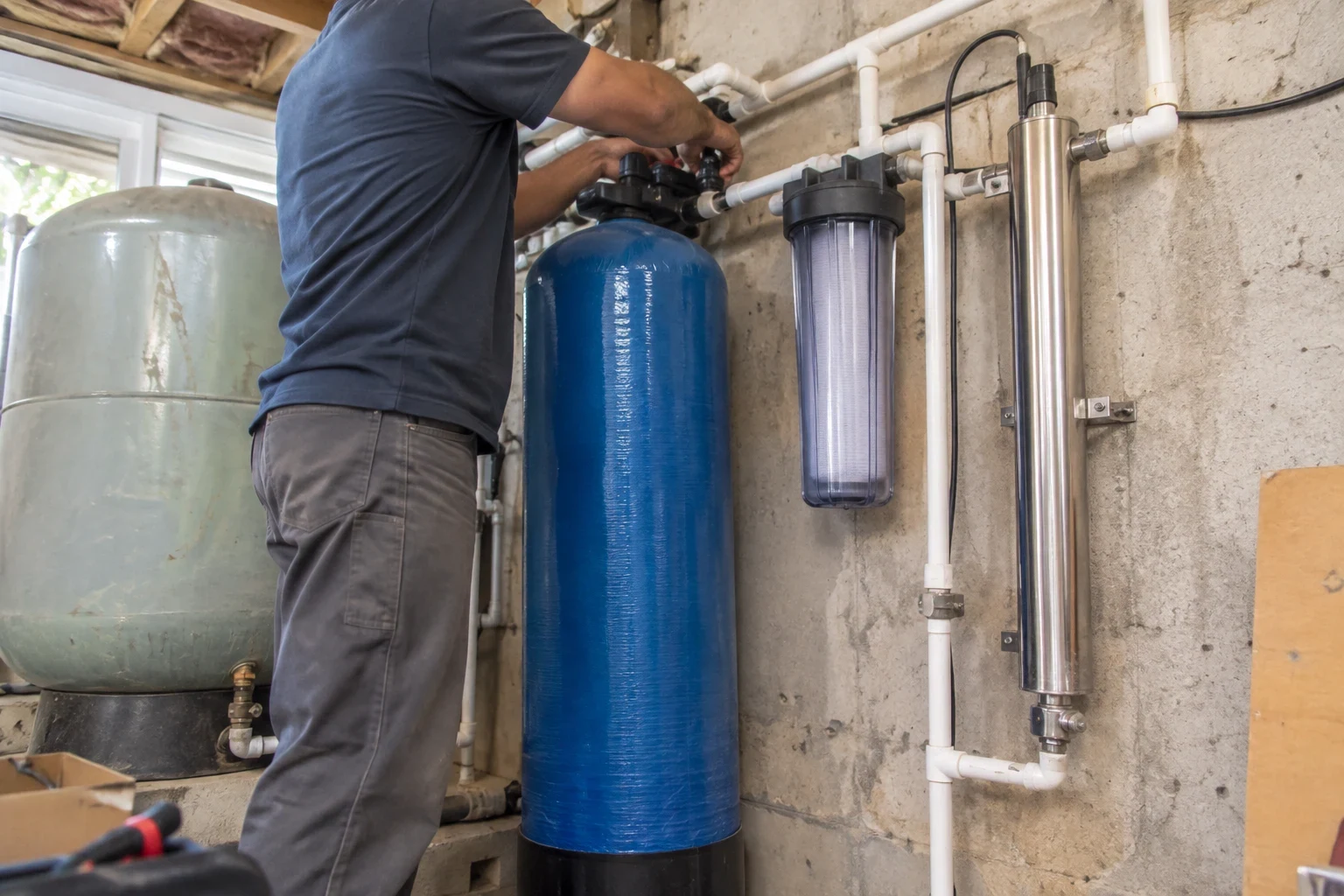
What a well filter system does, and when it fits
A private well delivers water straight from the ground with nothing removed. Fine sand and silt wear out faucet cartridges and toilet fill valves. Dissolved iron turns orange once it meets air, which is why it shows up as stains in sinks and on laundry. Hydrogen sulfide gas gives the water a rotten egg smell, strongest from the hot side.
A well filtration system catches those things after the pressure tank, before water reaches your fixtures. Most homes need two or three stages: a sediment filter, a media tank for iron or odor, and an activated carbon stage for taste. Wells are not common around Marina del Rey, so if your property has one, the system should be built around that well's numbers, not a stock package.
Before we install anything, we put the scope in writing: each housing, tank, valve and fitting, plus the factors that set the price. If something changes, we tell you before the work does.
What the installation includes
Sediment prefilter
A 5 or 20 micron cartridge in a clear or opaque housing, chosen by how much grit your well sends up. It protects every stage after it from clogging early.
Iron and odor media tank
A backwashing tank filled with oxidizing media that turns dissolved iron and sulfide into particles the bed can trap. A control valve on top flushes the bed on a set schedule so it keeps working.
Activated carbon stage
Granular carbon removes leftover odor and improves taste. It goes last so iron and sediment never reach it.
Bypass loop and drain line
We add a three-valve bypass so water keeps flowing during cartridge changes, and run the backwash line to an approved drain with a proper air gap.
Startup and walkthrough
We flush the media, set the backwash cycle, check pressure on both sides of the system and show you how to change cartridges.
How to tell your well needs a filter
Rust marks on fixtures
Reddish rings in the toilet bowl, tub or dishwasher come from dissolved iron that oxidizes once it hits air. The same iron settles inside your water heater and cuts its service life.
Sulfur odor at the tap
A rotten egg smell means hydrogen sulfide gas is in the water. When it is strongest on the hot side, the magnesium anode rod in the water heater can be intensifying it.
Sand in faucet screens
Gritty aerators or a toilet fill valve that never quite shuts off usually point to sediment slipping past the well screen.
Flow that weakens month by month
A cartridge packed with debris restricts water. A filter sized below your pump's output does the same from day one.
Off flavors in drinking water
A metallic or earthy taste often traces to iron, manganese or organic matter. The right media plus a carbon stage clears up most of it.
How a well filter job runs
- 1
Phone conversation
We ask about your pump, pressure tank size and what you are seeing or smelling. If you have a recent lab report for the well, keep it handy, because it tells us exactly what the filter must remove.
- 2
Site look and measurements
We check the space near the pressure tank, the pipe size and material, drain access and the pump's flow in gallons per minute. A backwashing tank needs enough flow to lift the media bed, so this number matters.
- 3
Written quote
You get a line-item quote covering each stage, the valve, fittings and labor, with the price factors explained. Nothing is added on install day that is not on that page.
- 4
Install day
We shut off the pump, cut in the bypass and mount the housings and tanks. Then we flush the system, set the backwash timing, check for leaks and clean up the work area.
Factors that set your well filter price
No two wells pull the same water, so well systems range more widely in cost than systems on city supply. Two things drive most of the number: which contaminants the system has to remove, and how much plumbing it takes to fit it into your home. We list each factor for your well in the written quote, so you can weigh it before anything is installed.
- Contaminants in the water
- If grit is the only issue, a single cartridge housing may cover it. Iron, manganese or sulfur call for a backwashing media tank with its own control valve, which adds equipment.
- Pump output and pressure tank
- A pump that delivers more gallons per minute needs larger housings and a larger media tank. Undersized parts would choke flow and leave the shower weak.
- Space and existing pipe
- A cramped utility area, a well head outside the house or aging galvanized pipe can take extra fittings and more hours to plumb correctly.
- Distance to a drain
- Backwash water has to go somewhere approved. When the nearest drain is far from the tank, the extra line and labor show up in the quote.
Well water filtration questions
Something not covered here? (310) 526-9815
Will a filter system lower my water pressure?
A properly sized system causes only a small pressure drop. Trouble starts when the housings or media tank are too small for the pump's flow. That is why we measure gallons per minute before we choose parts.
How often do the filters need changing?
Sediment cartridges usually last a few months, depending on how much grit your well produces. Media tanks backwash themselves and last years before the media needs replacing. We set a schedule based on your water and show you how to do the cartridge swaps.
Do I pay for installation?
We offer free install (we cover the cost). Your written quote lists the equipment and parts so you can see what you are paying for.
Should I add reverse osmosis for drinking water?
Many well owners do. A point-of-entry system handles sediment, iron and odor for the house, and an under-sink reverse osmosis unit gives finer filtration at the kitchen tap. Our Reverse Osmosis page explains how that unit works.
Why does the system need a drain?
Iron and sulfur media trap particles that have to be flushed out. The control valve runs a backwash cycle, usually at night, and sends that water to a drain.
Know the full cost before we start
Tell us about your well, your pump and what you are seeing at the tap. We will explain which stages you need and put the scope and price in writing.